
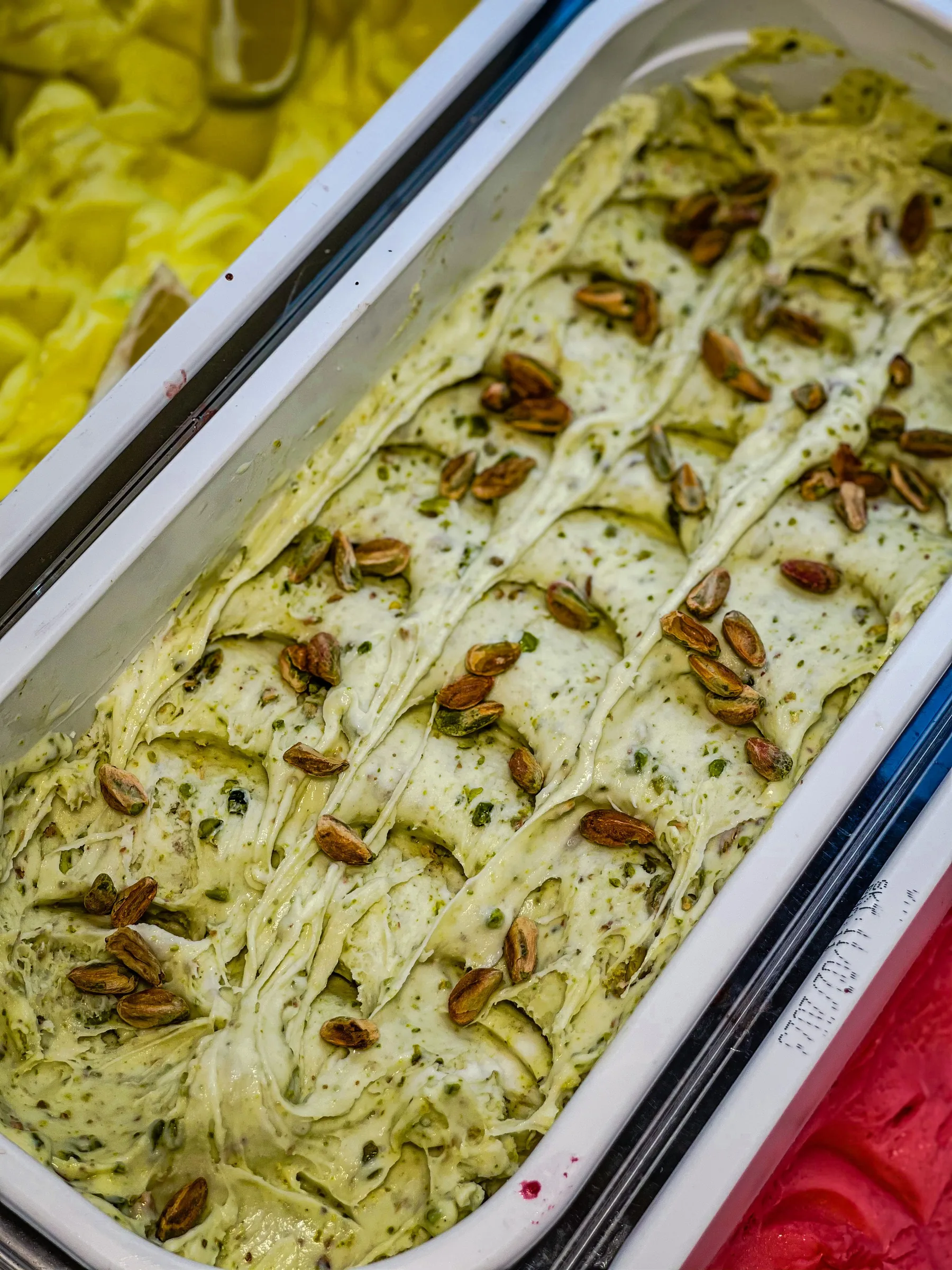
Smooth gelato is the result of many small physical decisions. Water has to freeze into crystals small enough to feel fine; sugars must keep the mixture scoopable; air needs to be incorporated at a useful level; fats, proteins and other solids have to support the structure; and the finished product must be stored and served in a sensible temperature range. Texture is therefore a record of formulation and handling, not a single magic ingredient.
Small ice crystals create the impression of smoothness
The most helpful approach is proportionate: enough detail to make an informed choice, without pretending every recipe follows one universal formula. All frozen desserts contain ice. The sensory difference comes largely from crystal size and distribution: crystals that grow too large become perceptibly coarse or icy. Fast freezing, balanced formulation and stable storage help control growth. A fruit sorbet is especially vulnerable because much of its structure begins as water from fruit and added liquid. The closer you look, the less useful binary labels become; several small pieces of evidence usually tell a better story than one dramatic cue.
Let a spoonful soften briefly on the tongue. Smooth gelato should become creamy or juicy without obvious crunching ice crystals, except where a deliberate inclusion provides texture. A product can leave the batch freezer smooth and become icy later after repeated warming and refreezing, so storage history matters. Gelato is a craft category, so method, ingredients and service temperature can alter the result even when two products share the same flavour name. A better question at the counter is usually more valuable than a rigid rule remembered from social media, especially when ingredients or cross-contact matter.
Sugar is part of the freezing system
This topic becomes clearer when you separate taste preference from safety and nutrition questions. Dissolved sugars lower the freezing point, which leaves some water unfrozen at serving temperature and helps a scoop remain workable. Different sugars vary in sweetness and freezing effect. Lemon needs enough sugar to balance both freezing behaviour and acidity, but it should still finish with brightness rather than syrupy heaviness. The same principle also protects curiosity: understanding the mechanics should open more flavours to exploration, not reduce them to a scorecard.
When tasting, distinguish “soft” from “sweet”. A technically skilled recipe can use sugar strategically for texture while keeping perceived sweetness in balance through acidity, cocoa, coffee or roasted flavours. Reducing sugar without reformulating the rest of the recipe can make gelato hard and icy; simply adding more can create a sticky or cloying result. Those are related but different decisions, and each deserves the right evidence rather than a shortcut. If a restriction is medical, move from general explanation to verified product information and appropriate professional guidance; tasting cannot answer a safety question.
Air changes density and melt
The useful distinction is not a slogan but a way of reading what is actually in front of you. Churning incorporates air while crystals form. The amount and bubble structure affect volume, softness, flavour release and how quickly the product collapses as it warms. A dense chocolate can feel luxurious, while a delicate dairy flavour may benefit from slightly more lightness. That is why a careful tasting leaves room for variation between makers while still asking whether the finished product makes technical and culinary sense.
Notice whether the scoop feels substantial for its size and whether the melt remains coherent. Density can be pleasurable, but a heavy paste is not the objective. Low overrun is often associated with gelato, yet extremely low air is not inherently superior; some aeration helps texture and handling. A good decision comes from combining the label, the serving context and your own priorities rather than relying on a single buzzword. This is also why London SAM avoids universal rankings: a sound explanation can travel between shops and seasons more reliably than a frozen leaderboard.
Stabilisers manage water over time
In practice, quality shows up in several small signals working together. Hydrocolloids such as locust bean gum, guar gum or pectin can bind water and slow crystal growth. In tiny amounts they can make texture more resilient through storage and service. Fruit-heavy sorbets and low-fat bases may need different water-management strategies from rich nut or chocolate recipes. This is especially useful at a busy counter, where a few precise observations can replace a long list of internet myths.
Evaluate the result rather than reacting to the ingredient name. Good stabilisation should be nearly invisible: smoothness without a gummy pull or elastic finish. Too much stabiliser can create a pudding-like or sticky texture, while too little control can allow iciness to develop. The right level depends on the recipe. No one cue is decisive on its own, so treat this as a pattern-recognition exercise rather than a pass-or-fail test. That approach keeps the decision practical: confirm what must be confirmed, observe what can be observed, and avoid certainty where the evidence is not available.
Temperature is the final ingredient
For a curious eater, the point is to turn technical detail into a better tasting decision. A beautifully formulated gelato can taste muted and feel hard if served too cold, while an over-warm product can become loose, overly sweet and structurally weak. Pistachio often becomes more aromatic as it softens, revealing nutty and toasted notes that deep cold suppresses. Think of those signals as a cluster rather than a checklist: recipe, temperature, texture and flavour all influence what reaches the spoon.
Taste after the first few seconds rather than judging only the initial hardness. A good service window lets aroma emerge while the scoop still holds its form. Display style alone does not tell you temperature control. Tall sculpted mounds can be visually attractive but require competent refrigeration and handling like any other presentation. That means asking specific questions, noticing sensory evidence and leaving room for variation between recipes and makers. Use the information that is specific to the product in front of you, then let preference decide the rest when safety is not at stake.
Use labels and menu language as a starting point. For allergies, intolerances or other health-related restrictions, verify the information that actually applies to the food in front of you.
What to take with you
The most useful lesson from this guide is not a rule to memorise but a method. Start with your purpose, identify the information that would change your decision, and then look for evidence that is specific to the product or situation. Gelato rewards attention: a clearer label can improve safety, a better question can reveal craftsmanship, and slower tasting can make a familiar flavour more interesting. London SAM treats those outcomes as complementary rather than competitive. Enjoyment is richer when the practical details are understood, while careful dietary choices do not have to remove curiosity from the experience.