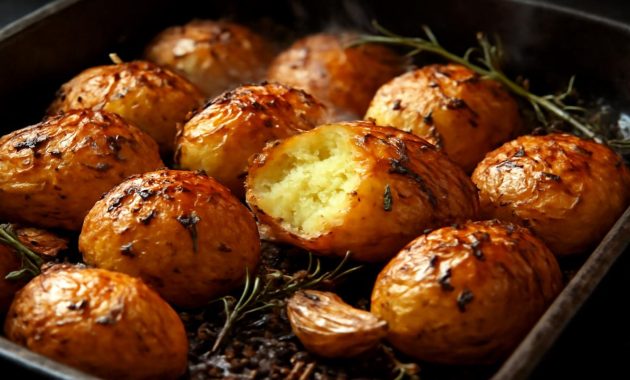

The first time I heard a potato sing, it was because I ignored it. I’d tossed a tray of parboiled chunks with oil and salt, slid them into a hot oven, and walked away. Twenty minutes later, somewhere between the kettle coming to a boil and a song humming out of the radio, I heard it: the faint, papery hiss of starch meeting heat, like distant rain on a tin roof. When I opened the oven, a cloud of fragrant steam rushed out, and the potatoes crackled softly in the pan—tiny blisters of gold just beginning to rise on their edges. I remember leaning in, breathing in that deep, earthy, toasty smell that only a potato can make, and thinking, with sudden determination: I want to learn how to do this on purpose.
The Potato That Changed Everything
Perfect crispy potatoes are deceptively simple. Five ingredients, give or take. A pan, some heat, and time. That’s it. Yet anyone who has ever wrestled with pale, flabby wedges or roasted cubes that cling to the pan like barnacles knows how easy it is to get them wrong. The outside goes leathery instead of crisp; the inside dries out instead of turning fluffy. They stick, they steam, they sulk.
The potato that changed everything for me was not glamorous. It wasn’t confited in duck fat or sprinkled with smoked sea salt. It was a modest, craggy-edged roastie made in a rental cabin kitchen, on a scratched old baking tray that rocked when you touched it. Outside, the late autumn rain was rapping on the windows. Inside, someone had thrown a log on the fire, the room smelled faintly of woodsmoke and wet wool, and there on the counter sat a bowl of potatoes—russets, the kind that look like dusty stones.
We had very little equipment, but we had time and appetites. So we did what people have always done when they want to coax something exceptional from something ordinary: we paid attention. How much water went into the pot. How fiercely the oven roared. How the potatoes looked when they were barely tender, when they were drained, when they were shaken in the colander until their edges wore tiny, soft scars.
That night, when we finally pulled the tray from the oven, the potatoes were transformed. Each piece was a tiny landscape: ridges and canyons of crisped starch, edges bronzed to a deep caramel gold, interiors so soft they almost sighed open when your fork found them. The sound when you bit down was a gentle shatter, followed by an almost creamy collapse. Salt, oil, and potato. That was all. But it was enough to make the entire table fall silent for a moment.
The trick, I realized later, isn’t in some grand secret ingredient. It’s a series of small, almost invisible choices—a choreography of water, heat, and starch. And once you understand those, the path to crispiness starts to feel less like a gamble and more like a promise.
The Science You Can Feel in Your Fingers
You don’t actually need a lab coat to understand why some potatoes crisp and others sulk. You just need your senses. Start with the feel of the raw potato in your hand: cool, firm, a little squeaky under the knife. The type you choose matters more than you think. Waxy potatoes—those smooth-skinned little red or yellow ones that stay shapely in salads—are like stoic swimmers: they hold themselves together in water, but they’re not interested in puffing up and turning airy in the oven. Starchy, floury potatoes—russets, Maris Pipers, King Edwards—are the ones that relax, expand, and give you that essential contrast: crackling shell, cloudlike interior.
Then there’s the water. You might be tempted to skip the pre-boil and go straight from raw cube to oven tray. But if you do, your potatoes will be trying to do two jobs at once: cook through and crisp up. They’ll spend so long gently steaming in their own moisture that by the time the water has finally made its way to the center, the surface will have lost its chance at greatness. The oven, in effect, becomes an expensive, unevenly heated saucepan.
So you start them in actual water instead.
Slide your chopped potatoes into a pot of cold, salted water. There’s something almost meditative in this. The potato pieces sink and bob, clouds of starch trailing off their cut faces. As the water comes to a simmer, the kitchen changes. A soft, earthy aroma blooms. Steam beads on the window. You can feel the potatoes move toward tenderness not just by poking them—with a knife that slips in and out with only a whisper of resistance—but by watching the edges lose their sharpness, becoming slightly swollen, like a sketch smudged with a thumb.
On the stove, magic is already happening: some of the starch in the outer layers is gelatinizing, loosening, getting ready to become that all-important rough surface that crispness clings to. But the true turning point comes right after you drain them.
The Shaggy Edge Secret
There’s a brief, perfect window after you drain parboiled potatoes when they’re hot, soft-edged, and vulnerable. This is the moment that separates the casually roasted from the transcendent. You pour them into a colander or back into the pot, and then—gently but decisively—you rough them up.
Shake. Not violently, not like you’re trying to break them, but enough to let the pieces bump and tumble, their surfaces rubbing against one another. If you listen closely, you’ll hear a soft, muffled knocking: potato against metal, potato against potato. Lift the lid and you’ll see it—the clean-cut cubes or wedges have turned fuzzy around the edges, their surfaces grainy and pale, as if dusted in damp snow.
This shaggy-ness is your insurance policy. Every little fracture, every tiny tear in that outer layer is a place where hot fat can seep in and hot air can dance, turning starch into brittle, glassy crispness. Think of it like preparing a mountainside for a spectacular frost: the more texture there is, the more places the cold—or in this case, heat—can grip.
In those few minutes between draining and roasting, another quiet transformation takes place. The potatoes sit there, steaming off excess moisture, drying out just enough. If you cup your hands around the pot, you can feel the warmth radiating. Lift a piece, and you’ll see the sheen of wetness give way to a more matte, velvety look. This is what you want: not soggy surfaces, but barely tacky ones that will drink in oil like thirsty soil drinks rain.
There is a kind of patience required here. You can’t rush the steam. But you can use the time well by turning your attention to the other crucial element: the fat.
Fat, Heat, and the Music of the Oven
There’s a point in making crispy potatoes when you realize you’re not so much cooking as conducting. Everything depends on timing—the moment when the potatoes, the fat, and the oven arrive together in shared urgency. If one is lagging, the others wait, and your crispiness pays the price.
The fat doesn’t have to be fancy. Neutral oil with a high smoke point, like sunflower or canola, is efficient and reliable. Olive oil brings a grassy depth and a tender whisper of fruitiness. Goose or duck fat, if you’re lucky enough to have some, will wrap your potatoes in a richness so fragrant it almost feels indecent. What matters most is not the status of the fat, but its temperature.
Imagine pouring your soft-edged, parboiled potatoes into a tray slicked with cold oil. They’ll sit there, absorbing fat before it has a chance to turn hot and wild, like guests arriving too early to a party. By the time the oil heats, they’ll already be halfway greased and not yet crisp—more soaked than seared. Instead, you want them to hit oil that is already shimmering and ready, already eager to spit and sizzle.
So you slide your empty roasting pan, with its shallow pool of oil or fat, into a blazing-hot oven. The metal creaks as it expands, the oil loosens and thins, a faint ripple moving across its surface. When you open the door, the heat rushes out in a wave that tingles your face, smelling of past meals, baked bread, maybe a ghost of garlic. Carefully, you pull the pan out and tip the potatoes in.
That first sound—when water clinging to the potatoes meets the hot fat—is the appetizing hiss of intention. Steam leaps up. The potatoes sputter and shift as you turn them, each piece collecting a shining coat. On the stove, this would be a shallow fry. In the oven, it’s more of a dry-land swim in heat and oil, helped along by hot air flowing all around.
You spread the potatoes out, giving them space. This, too, is non-negotiable. If they crowd, they’ll steam each other into softness. If they sprawl, their surfaces will dry and brown. As you slide the tray back into the oven, you’re not just cooking—you’re setting the stage for a slow, steady alchemy.
There’s a point, midway through roasting, when you crack open the oven door to turn them and your senses are hit all at once. Heat washes over your hands and face. The tray hisses loudly. The smell is almost intoxicating: nutty, toasty, a little sweet at the edges, like warm bread crust. You reach in with a spatula and—this is important—you turn the potatoes gently but thoroughly, exposing new, pale sides to the metal and the oil, letting the already-golden faces rest and deepen in color.
The Perfect Roast Potato Rhythm
Everyone eventually finds their own roast potato rhythm, but a reliable pattern might look something like this:
| Stage | What You Do | What You Notice |
|---|---|---|
| Parboil | Simmer in salted water until just tender at the edges. | Edges soften, aroma turns earthy and warm. |
| Steam & Rough Up | Drain well, shake in pot or colander to create shaggy edges. | Surfaces look fuzzy, feel slightly tacky, steam billows off. |
| Hot Fat Hit | Tip into preheated oil or fat, toss to coat, spread out. | Immediate sizzle, glossy sheen, pan feels fiercely hot. |
| Roast & Turn | Roast at high heat, turning once or twice. | Color deepens from pale gold to amber, edges blister. |
| Final Crisp | Give a last blast of heat; season immediately. | Edges shatter at a touch, sound hollow when shaken. |
By the time you reach that last stage, the potatoes look almost architectural. You can pick one up and examine the way light catches on the rough, crisped edges, making tiny highlights of gold and bronze. If you gently tap two pieces together, they clink faintly—an edible kind of pottery.
The Art of Choosing and Cutting
Crisp potatoes don’t begin in the oven; they begin earlier, with the kind of potato you pick up at the market and the way your knife moves through it. There’s something quietly satisfying about choosing them: brushing off a little soil, feeling the weight of each one in your palm, looking for those starchy, dependable varieties that feel almost chalky under the skin. The skins might be mottled, not perfect supermarket gloss, but that’s all right. Flavor rarely cares for glamour.
Back at your counter, the shape you cut them into nudges the outcome. Big chunks promise lush, pillowy centers and big, dramatic faces to crisp. Smaller cubes or wedges offer a higher crunch-to-fluff ratio—more edges, more surfaces, more places for heat to work. Thick slices lie somewhere in between, especially when roasted in layers: crisp at the top, soft and yielding underneath.
As your knife slices through each potato, you can feel its personality. A floury potato will give slightly, the blade leaving faint crumbles along the cut. A waxy one stays smooth and glossy inside, unwilling to give up its structure so easily. For the crispiest results, it’s hard to beat those floury souls. They’re the ones that practically beg you to parboil, rough them up, and roast them hard.
Even the decision to peel or not becomes part of the story. Peeled potatoes give you maximum surface area of soft starch to roughen, more fluffed-up edges to turn into crust. Unpeeled ones gift you with russet, rugged strips of skin that crisp into chewy, toasty ribbons, tasting faintly of earth and campfire. Either way, the trick remains the same: give the heat something to hold on to.
Seasoning: The Last, Crucial Whisper
Salt is never just salt when it comes to potatoes. It’s the difference between a bite that tastes like anonymous crunch and one that tastes like the very idea of comfort, sharpened and made bright. There’s a moment, just as the potatoes leave the oven, when they’re still audibly crackling, tiny fissures opening and closing as the hot air inside them meets the cooler air of the kitchen. This is when you want to season.
Tossing salt onto cooler potatoes is like throwing pebbles at a closed door; some of it will stick, most of it will slide away. But on hot, freshly roasted potatoes, the salt clings readily, dissolving in tiny patches of residual surface steam, then drying in place as the last of the moisture flees. If you lean in, you can sometimes see it—a faint, glistening shimmer that fades into a matte, crystalline dusting.
You can, of course, go further. A clove of garlic, smashed and tumbled in with the oil halfway through cooking so it infuses the fat without burning. A few sprigs of rosemary or thyme, their leaves crisping gently and leaving resinous, piney scents in their wake. A grind of black pepper, its warmth rising at the back of your throat as you chew. But you don’t have to. Some of the most memorable potatoes are those that taste simply, deeply, almost profoundly of themselves—of earth and starch and fire.
Potatoes as Memory, Not Just Side Dish
Crispy potatoes have a curious way of anchoring memories. Maybe it’s because they so often appear at thresholds: on winter holidays when the sky turns dark too early; at Sunday lunches that stretch lazily into late afternoon; around camping tables when the air tastes of pine and smoke; on weeknights when you’re tired and need something familiar, something that feels like being looked after.
Picture a table where a tray of crisp potatoes lands in the center with a soft, hollow thunk. Conversation wobbles, then refocuses. Hands reach for serving spoons a little faster. Someone burns their fingers trying to steal one straight from the tray, then laughs around a mouthful, fanning their lips, already going back for another. Every culture that loves potatoes has its own version of this moment: the shared pause, the almost childlike pleasure of hot, salty, crunchy, soft.
When you know the trick—the real trick, which is not a single step but a quiet sequence of them—you gain something small but potent: the ability to reliably summon that moment. To take an unassuming pile of roots and turn them into something that makes people lean in, that makes them close their eyes for a second as they bite, that makes them say, “How did you get them like this?”
And the answer, when you give it, can be wonderfully simple. You can tell them about parboiling and roughing up and hot fat. You can talk about shaggy edges and space on the pan and seasoning while they’re still singing. But more than anything, what you’ve really done is pay attention—to the hiss, the smell, the texture under your fingertips. To the way water leaves and heat arrives. To the moment when plain potatoes decide, under your gentle guidance, to become something more.
Next time you slide a tray into the oven and walk away, listen for it—that faint, triumphant music of crispness forming. It’s the sound of starch and heat agreeing, together, to give you what you were hoping for all along: potatoes that shatter delicately at the edge, yield like clouds within, and make you, for a few bites at least, forget everything except the deliciously simple fact of being here, now, at the table.
FAQ: Your Crispy Potato Questions Answered
Why do my roast potatoes come out soft instead of crispy?
They’re usually steaming instead of roasting. This happens when you skip parboiling, don’t rough up the edges, crowd the pan, or use an oven that isn’t hot enough. Give them space, preheat your tray and fat, and make sure excess moisture has steamed off before roasting.
How long should I parboil the potatoes?
Usually 7–12 minutes, depending on the size of the pieces. You want the knife to slip in easily but not so soft that they fall apart. The edges should look slightly swollen and delicate.
Can I prepare them in advance?
Yes. You can parboil, drain, rough up, and let them cool completely, then refrigerate them for several hours or even overnight. Roast straight from the fridge in hot fat; they often get even crispier thanks to the drier surfaces.
Which potatoes work best for crispy roasting?
Starchy or floury varieties like russets, Maris Piper, or King Edward are ideal. They fluff up inside and form that essential rough outer surface. Waxy potatoes will roast, but they’ll be denser and less dramatically crisp.
Do I have to use animal fat, or will oil work?
Oil works perfectly well. A neutral oil with a high smoke point is reliable, and olive oil gives great flavor. Animal fats like goose or duck fat add extra richness and aroma but aren’t required for real crispiness—the technique matters more than the specific fat.
