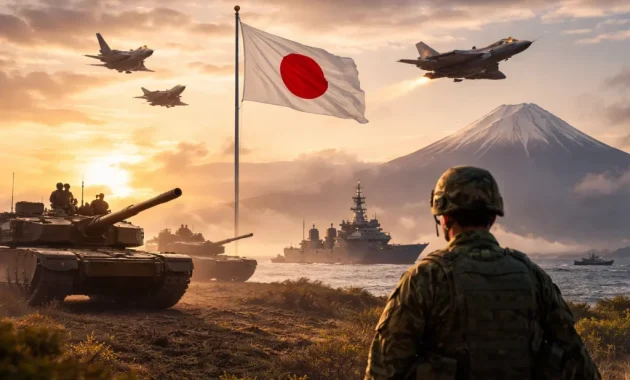
The winds of change are sweeping through Japan’s defense landscape, as the country prepares to embark on a radical military overhaul worth a staggering 9,000 billion yen by 2026. This historic shift, driven by escalating tensions with China and North Korea, as well as growing uncertainty over the reliability of U.S. protection, marks a profound departure from Japan’s long-held pacifist posture.
For a nation long defined by its modest defense ambitions and a constitution that renounces war, this impending transformation signals a seismic shift in strategic thinking. Japan, an island nation heavily dependent on imported energy and resources, is now facing the stark reality that its security needs a more robust and active defense shield.
From Pacifist Posture to Active Shield
Japan’s defense policy has been anchored in the post-World War II pacifist constitution for decades, limiting its military capabilities and role on the global stage. However, the rapidly evolving geopolitical landscape has forced a fundamental rethinking of this approach.

Faced with the growing assertiveness of China in the East China Sea and the persistent threat from a nuclear-armed North Korea, Japan now recognizes the need to bolster its defense capabilities. This shift is further compounded by concerns over the reliability of U.S. security guarantees, as the global superpower grapples with its own strategic priorities.
The decision to allocate a staggering 9,000 billion yen towards defense spending by 2026 underscores Japan’s determination to transform its military from a passive deterrent to a more proactive and versatile force capable of defending its national interests.
The 9,000 Billion Yen Question: What Japan Wants to Buy
Japan’s defense overhaul encompasses a wide range of military hardware and capabilities, reflecting the country’s evolving security needs. From upgrading its fighter jet fleet and strengthening its missile defense systems to investing in cutting-edge technologies like hypersonic weapons and space-based surveillance, the planned expenditure aims to enhance Japan’s ability to deter and respond to a wide range of threats.

Alongside these hardware acquisitions, the defense buildup also includes significant investments in improving Japan’s command, control, and communication systems, as well as enhancing the training and readiness of its military personnel. The goal is to create a more integrated, versatile, and responsive defense force capable of operating seamlessly across different domains.
Experts suggest that the 9,000 billion yen price tag reflects Japan’s determination to transform its military into a deterrent force that can effectively counter the growing capabilities of its regional rivals, while also projecting a stronger presence in the Indo-Pacific region.
Industry, Manpower, and Money: The Hard Limits
Executing this ambitious defense overhaul will undoubtedly pose significant challenges for Japan. The sheer scale of the planned investments will require careful balancing of the country’s economic and budgetary constraints, as well as the capacity of its defense industry to deliver the necessary capabilities on time and within budget.

Recruiting and retaining a highly skilled and motivated military workforce will also be a critical factor, as Japan grapples with demographic challenges and the need to adapt to evolving technological demands. The country’s defense industry, while technologically advanced, may face hurdles in scaling up production and keeping pace with the rapid evolution of military hardware.
Navigating these complex issues will require a coordinated effort between the government, the military, and the defense industry, ensuring that Japan’s defense transformation remains on track and delivers the desired strategic outcomes.
Regional Triggers: China, North Korea, and U.S. Uncertainty
The driving forces behind Japan’s defense overhaul are rooted in the rapidly changing geopolitical dynamics of the Asia-Pacific region. The growing assertiveness of China, particularly in the East China Sea and the South China Sea, has heightened concerns in Tokyo about its ability to defend its territorial integrity and maritime interests.

The persistent threat posed by North Korea’s nuclear and missile programs, coupled with the unpredictability of its leadership, has also been a significant factor in Japan’s decision to bolster its defense capabilities. The uncertainty surrounding the reliability of U.S. security guarantees, given the shifting global priorities of the superpower, has further reinforced the need for Japan to take a more proactive approach to its own defense.
As these regional flashpoints continue to simmer, Japan’s defense overhaul is a strategic response aimed at safeguarding its national interests and ensuring its security in an increasingly volatile geopolitical environment.
What This Means in Practice: Possible Crisis Scenarios
Japan’s defense transformation will have far-reaching implications, both in terms of its regional posture and its ability to respond to potential crises. Experts suggest that the enhanced capabilities could enable Japan to better deter and, if necessary, respond to scenarios such as a conflict over the Senkaku/Diaoyu Islands, a North Korean missile or nuclear attack, or even a potential clash in the Taiwan Strait.

The investment in advanced technologies, such as hypersonic weapons and space-based surveillance, could also provide Japan with new options for deterrence and crisis management, potentially altering the strategic balance in the region. Additionally, the improved integration of its defense forces and the strengthening of its command and control systems could enhance Japan’s ability to coordinate a swift and effective response to emerging threats.
However, the successful implementation of this defense overhaul will require careful navigation of the geopolitical landscape, as well as the management of domestic and international perceptions regarding Japan’s evolving military role in the region.
Key Terms and Concepts Worth Unpacking
As Japan embarks on this defense transformation, several key terms and concepts are worth unpacking to fully understand the significance of this shift:

- Pacifist Constitution: Japan’s post-World War II constitution, which renounces war and limits the country’s military capabilities.
- Active Defense: The shift from a passive deterrence posture to a more proactive and versatile defense strategy.
- Indo-Pacific Region: The strategic theater encompassing the Indian Ocean and the Pacific Ocean, which has become a focus of geopolitical competition.
- Deterrence: The ability to prevent adversaries from taking aggressive actions through the threat of retaliation or punishment.
- Crisis Management: The ability to effectively respond to and mitigate the impact of potential conflicts or security crises.
Understanding these concepts is crucial in contextualizing Japan’s defense overhaul and its implications for the regional and global security landscape.
Risks, Benefits, and Long-Term Consequences
Japan’s defense transformation is a double-edged sword, fraught with both potential risks and benefits. On the one hand, the enhanced military capabilities could strengthen Japan’s deterrence posture, allowing it to better protect its national interests and contribute to regional stability. However, the shift away from its pacifist traditions may also raise concerns among its neighbors and the international community, potentially leading to increased tensions and a regional arms race.
Furthermore, the significant financial investment required for this overhaul could strain Japan’s economic resources and divert attention from other pressing domestic priorities. The successful implementation of this plan will also hinge on the government’s ability to manage public perception, navigate diplomatic challenges, and ensure the effective integration of new technologies and capabilities into the country’s defense forces.

In the long run, the consequences of Japan’s defense transformation will depend on how it navigates these complex tradeoffs, and whether the country can strike a delicate balance between enhancing its security and maintaining its role as a responsible regional and global stakeholder.
FAQ
What is the total amount of investment planned for Japan’s defense overhaul?
Japan plans to invest approximately 9,000 billion yen (around $68 billion) in its defense overhaul by 2026.
What are the key drivers behind Japan’s decision to transform its military?
The primary drivers behind Japan’s defense overhaul are the mounting tensions with China, the persistent threat from North Korea, and the growing uncertainty over the reliability of U.S. security guarantees.

What type of military capabilities is Japan looking to acquire?
Japan’s defense overhaul includes plans to upgrade its fighter jet fleet, strengthen its missile defense systems, and invest in cutting-edge technologies like hypersonic weapons and space-based surveillance.
How will Japan’s defense transformation impact the regional geopolitical landscape?
Japan’s defense overhaul could alter the strategic balance in the Asia-Pacific region, potentially leading to increased tensions and a regional arms race. However, it could also strengthen Japan’s deterrence capabilities and contribute to regional stability.
What are the potential risks and challenges associated with Japan’s defense transformation?
Key risks include the strain on Japan’s economic resources, the management of public perception and diplomatic challenges, and the effective integration of new technologies and capabilities into the country’s defense forces.
How will Japan’s defense transformation affect its pacifist traditions?
The shift away from Japan’s pacifist traditions could raise concerns among its neighbors and the international community, potentially leading to increased tensions and a reevaluation of Japan’s role in the region.
What are the long-term consequences of Japan’s defense overhaul?
The long-term consequences will depend on how Japan navigates the complex tradeoffs between enhancing its security and maintaining its role as a responsible regional and global stakeholder.
How will Japan’s defense transformation impact its relationship with the United States?
Japan’s defense overhaul could strengthen its cooperation and coordination with the United States, as the two allies work to address the evolving security challenges in the region. However, it could also lead to some tensions if the U.S. perceives Japan’s actions as a departure from its traditional security role.