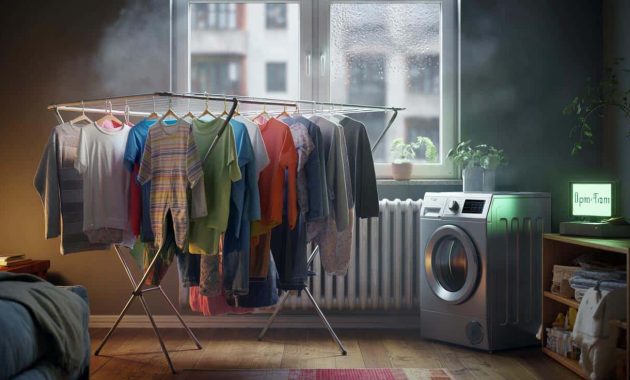
You hang it carefully on the clothes horse in the living room, next to the radiator, feeling vaguely proud of your domestic effort. A few hours later, you pull it over your head… and there it is. That faint, sour, “wet dog in a cupboard” smell you really didn’t sign up for. No visible stain, no obvious reason. Just this stubborn, damp note that ruins the whole idea of “fresh laundry”. You sniff the air, blame the washing machine, the product, maybe even the weather. But the real culprit is usually quieter, more invisible, hiding in the way we dry our clothes indoors. And once you’ve noticed it, you can’t un‑smell it.
When “fresh” laundry quietly turns stale
Indoor drying sounds harmless. It’s what you do when it’s raining sideways or when the balcony is basically an ice rink. You spread T‑shirts and towels on the rack, push it near a heat source, and get on with your day. A few hours later, the fabric feels dry. So your brain ticks the box: job done.
Your nose, on the other hand, is less convinced. There’s this odd mix of perfume and something… off. Not dirty, but not clean either. Like the smell of a locker room long after everyone’s left. *Your laundry has technically dried, but it hasn’t really finished its journey.* And in that in‑between zone, something microscopic and very active has been having a party.
On a grey Tuesday in Manchester, a young couple tracked their laundry journey with an air quality monitor. They wanted to understand why their baby’s sleepsuits smelled musty after a single night on the indoor rack. As soon as they hung up a full load in the lounge, humidity shot up from 45% to nearly 75% within an hour. The windows fogged slightly, the room felt heavier, yet nothing looked “wrong”.
By morning, the clothes felt dry to the touch, but the monitor still showed raised humidity. The musty smell appeared especially on thicker cottons and towels. They tried more detergent, extra spin cycles, expensive “fresh breeze” pods. The smell kept coming back. The only thing that changed the result was opening the windows wide and moving the rack closer to a real airflow. Numbers on a little screen confirmed what their noses had been telling them for weeks.
The boring truth is this: most bad smells on “clean” laundry are about moisture that sticks around too long. When clothes dry slowly in a warm, damp room, bacteria and mould spores find themselves in perfect conditions to grow. They feed on tiny leftovers of sweat, sebum, skin cells and excess detergent caught in the fibres. As they grow, they release volatile compounds your nose reads as “sour”, “stale”, or “damp cupboard”.
That’s why the same detergent can smell incredible on line‑dried laundry and weirdly swampy indoors. Sun and wind blast moisture away quickly. Inside, air is often still, heavy, and already humid from showers, cooking, breathing. The fabric dries at the surface first, trapping dampness deeper inside. By the time your hands say “dry”, the invisible chemistry of smell has already taken another path.
How to dry indoors without the mystery odour
The single most effective trick is brutally simple: speed up the drying window. You want your clothes to go from “wet” to “properly dry” in as few hours as possible. That means airflow first, heat second. Open a window, even just one in vent position. Park the drying rack in the path of that moving air, not in the darkest corner of the bedroom.
If you have a fan, point it gently towards the rack on a low setting. You’re not trying to blast the clothes across the room, just move the air that clings around them. Thicker items like jeans or hoodies? Turn them inside out, shake them once, and spread them so they’re not touching anything else. When the air can move, smell has far less room to linger.
Here’s the bit no one likes to admit: a lot of “bad laundry smell” starts in the machine itself. Short eco cycles with low temperatures, combined with liquid detergents and fabric softeners, can leave a thin biofilm of gunk behind the drum and in the seal. That residue is a five‑star hotel for bacteria. Every new load passes through it, picking up a faint whiff before it even reaches the drying rack.
➡️ Why women in their late 40s should reconsider blunt cuts
➡️ Mobility in defence: stakes, advantages and implementation
➡️ A rare early-season polar vortex shift is forming, and experts warn its March intensity could be unlike anything seen in years
➡️ Winter storm warning issued as rapidly falling temperatures threaten widespread infrastructure strain
➡️ I don’t boil potatoes in water anymore. I’ve switched to this aromatic broth
➡️ The Chinese navy commissions an aircraft carrier and six warships in a single day
➡️ North Atlantic warning: orcas now targeting commercial vessels in what experts call coordinated assaults
➡️ Official and confirmed: heavy snow is expected to begin late tonight, with alerts warning of major disruptions and travel chaos
You don’t need to go full cleaning influencer. Run a hot maintenance wash with a machine cleaner or plain white vinegar once a month or so. Wipe the door seal when you remember. Leave the door and detergent drawer slightly open so the interior can dry. Soyons honnêtes : personne ne fait vraiment ça tous les jours. But once a month is already a small revolution for your laundry smell.
One laundry expert summed it up with a line that sticks:
“Your nose isn’t betraying you – it’s just faster at reading humidity and bacteria than your eyes are.”
That phrase helps when you start thinking you’re imagining things. If clothes smell damp, treat them as damp, even if they feel dry on the surface. Give them more air, or a short spin in a dryer if you have one. Don’t fold or store “borderline” items; that’s how the odour locks in. And remember, we’ve all shoved a barely‑dry hoodie into a drawer five minutes before leaving the house, then regretted it all day. On a background level, the goal is simple: help your home breathe, and your wardrobe will follow.
- Hang laundry in the most ventilated room, not the warmest one.
- Keep items spaced apart; crossing clothes traps moisture.
- Prioritise fast‑drying fabrics for indoor loads on very humid days.
Living with laundry, not fighting it
Fresh laundry is one of those quiet comforts that anchors a home. When that comfort turns into a vaguely embarrassing smell on your clothes at work or at the gym, it hits something deeper than just hygiene. It touches how “together” you feel in your everyday life. On a bad week, a musty towel can feel like the last straw.
The upside is that this is one of those domestic problems where small, realistic changes pay off quickly. A slightly different place for the rack. A regular window‑opening habit. One hot wash a month for the machine. None of that is glamorous, but it quietly rewrites the story your nose tells your brain every time you open the wardrobe.
We’ve all already lived that moment where you pull on a “clean” sweater and catch a whiff of something that doesn’t match the morning you wanted. That’s the point where smell stops being a technical topic and becomes very personal. Sharing tricks with neighbours, flatmates, or online strangers often leads to the same discovery: most people are battling the same invisible humidity. Once you’ve noticed it, you start reading rooms differently, feeling air differently, even planning your laundry around the weather app in a new way. And that small shift quietly changes how “home” smells.
| Point clé | Détail | Intérêt pour le lecteur |
|---|---|---|
| Humidité lente | Séchage trop long en intérieur nourrit bactéries et odeurs | Comprendre la vraie source du “parfum de mouillé” |
| Air qui circule | Fenêtres entrouvertes + ventilateur = séchage plus rapide | Solution simple sans acheter de nouvel appareil |
| Machine propre | Cycle à chaud mensuel pour limiter les biofilms | Limiter les odeurs avant même le séchage |
FAQ :
- Why does my laundry smell bad even with expensive detergent?Because smell is mostly about moisture and bacteria, not price. If clothes dry slowly in a humid room, even luxury products can end up with a sour note.
- Is it safe to dry all my laundry in the bedroom?It’s common, but not ideal. Frequent indoor drying raises humidity, which can affect sleep, walls, and long‑term air quality. Ventilation is key if you use your bedroom.
- Do I need a dehumidifier to avoid bad smells?No, but it helps in small or very damp homes. Good airflow, spacing clothes, and shorter drying times already make a big difference for most people.
- Why do towels smell musty faster than T‑shirts?Towels are thick and absorbent. They hold onto water deeper in the fibres, so they stay damp longer. That extra time is exactly what bacteria love.
- Can I “save” already smelly laundry without rewashing?Sometimes. A full, fast dry in strong sun or a hot tumble cycle can reduce odour. If the smell persists, rewashing with a hotter cycle is usually the only real fix.