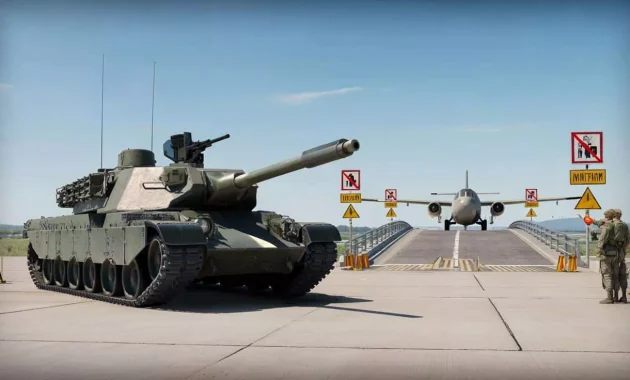
The US Army’s latest acquisition, a “light tank” designed to provide mobile firepower to lightly armed troops, has become a costly misstep that threatens to leave the service saddled with an outdated and underperforming vehicle. This ambitious project, intended to fill a critical gap on the modern battlefield, has instead become a cautionary tale of how even the best-laid plans can go awry when confronted with the realities of military logistics and the relentless march of technological progress.
The tank, known as the Mobile Protected Firepower (MPF), was conceived as a nimble and versatile platform that could be rapidly deployed from transport aircraft to support infantry units. However, as the development process unfolded, the vehicle’s weight ballooned, transforming it into a heavy-duty behemoth that now struggles to fit on many military bases, let alone be rapidly airlifted into combat zones.
This mismatch between the original design intent and the final product has left the Army facing a costly dilemma, one that threatens to undermine its ability to respond quickly to emerging threats and deploy effectively in the field.

A “Light Tank” That Weighs Like a Heavy One
The MPF’s origins can be traced back to the Army’s recognition of a growing vulnerability in its force structure. As the service shifted its focus towards more agile, lightly armed units capable of rapid deployment, the absence of a dedicated mobile firepower platform became increasingly apparent. The solution, or so it seemed, was the development of a “light tank” that could provide the necessary firepower and protection while maintaining a relatively small footprint.
However, as the design and engineering process unfolded, the MPF’s weight crept steadily upwards, eventually reaching a staggering 38 tons – a far cry from the original vision of a lightweight, easily transportable platform. This unexpected growth in size and heft has now become a significant liability, as many military bases and training facilities are simply not equipped to handle vehicles of such immense size and weight.
The consequences of this design flaw are significant, as the Army now faces the prospect of being unable to effectively utilize the MPF in its intended role. The vehicle’s sheer bulk means that it cannot be easily deployed to remote outposts or rapidly transported into combat zones, limiting its strategic value and potentially undermining the entire rationale for its development.

Key Missteps Baked in from the Start
The MPF’s woes can be traced back to a series of critical missteps that occurred during the initial stages of the program. From the outset, the Army’s requirements for the vehicle were ambitious, calling for a platform that could provide both significant firepower and robust protection, all while maintaining a relatively small size and weight.
However, as the design process unfolded, it became increasingly clear that these competing demands were difficult, if not impossible, to reconcile. The desire for heavy armor and powerful armaments inevitably led to a significant increase in the vehicle’s overall size and weight, which in turn jeopardized its ability to be rapidly deployed and maneuvered in the field.
Furthermore, the Army’s decision to pursue a “commercial-off-the-shelf” (COTS) approach to the MPF’s development, rather than starting from scratch, may have compounded these issues. By adapting an existing design, the service may have been constrained by pre-existing limitations and compromises that proved difficult to overcome.

A Bureaucracy That Could Not Hit the Brakes
As the MPF’s weight and size continued to balloon, alarm bells should have been ringing throughout the Army’s acquisition bureaucracy. However, it appears that the decision-making process was unable to respond effectively to these emerging challenges, resulting in a continued push forward with a flawed design.
This lack of agility and responsiveness within the military’s procurement system is a longstanding issue, and the MPF case serves as a poignant example of its consequences. Even as the vehicle’s shortcomings became increasingly evident, the bureaucratic inertia inherent in the acquisition process made it difficult to step back, reassess the requirements, and pivot towards a more viable solution.
The result is a tank that feels outdated and ill-suited to the Army’s needs before it has even been widely deployed, saddling the service with a costly and potentially useless piece of equipment.

A Tank with No Clear Role on Bases That Cannot Use It
The MPF’s weight and size challenges extend beyond the logistical hurdles of deployment, as the vehicle’s sheer bulk also poses significant challenges for the military bases and facilities that would be responsible for housing and maintaining it.
Many existing Army installations simply lack the infrastructure and support systems necessary to accommodate such a large and heavy platform. Issues such as reinforced roads, upgraded maintenance facilities, and the availability of specialized equipment and personnel all come into play, further complicating the vehicle’s integration into the broader force structure.
This mismatch between the MPF’s design and the realities of military infrastructure raises serious questions about the vehicle’s long-term viability and the Army’s ability to effectively utilize it in the field. With no clear path forward for basing and supporting the tank, the service may find itself forced to make difficult choices about its future deployment and employment.

Forced Changes to the Pentagon’s Acquisition Playbook
The MPF’s struggles have broader implications for the Pentagon’s approach to weapon system development and procurement. The failure to properly anticipate and address the vehicle’s weight and size issues has exposed vulnerabilities in the military’s acquisition process, raising questions about how the service can better align its requirements and capabilities with the realities of modern logistics and operations.
Moving forward, the Army and the broader Defense Department may need to re-evaluate their approach to light armored vehicle development, placing a greater emphasis on modularity, flexibility, and ease of deployment. This could involve rethinking the tradeoffs between firepower, protection, and mobility, as well as exploring alternative technologies and design concepts that can better meet the demands of the modern battlefield.
Ultimately, the MPF saga serves as a cautionary tale, underscoring the importance of rigorous testing, iterative design, and a willingness to adapt and pivot in the face of emerging challenges. As the military continues to grapple with the evolving nature of warfare, lessons learned from this experience may prove invaluable in shaping the next generation of combat vehicles.

Why “Light” Armor is So Hard to Get Right
The challenges faced by the MPF are not unique to this specific program, but rather reflect the inherent difficulties in developing truly “light” armored vehicles that can provide meaningful firepower and protection without sacrificing mobility and deployability.
Throughout history, militaries have grappled with the delicate balance between these competing requirements, often forced to make difficult tradeoffs that can undermine the overall effectiveness of their armored forces. The MPF’s struggles are a stark reminder that this challenge remains as relevant today as it has ever been, and that the quest for the perfect light tank continues to elude military planners.
As the Army and other services explore new avenues for light armor development, they will need to carefully consider the lessons of the MPF program, as well as draw upon insights from past efforts to develop effective, deployable, and adaptable armored platforms. Only by embracing a more holistic and flexible approach to design and engineering can the military hope to overcome the persistent challenges of light armor development.

What This Means for Future Combat Vehicles
The MPF’s woes have far-reaching implications for the future of the Army’s combat vehicle portfolio, as well as the broader trends shaping the development of military hardware across the U.S. armed forces.
The failure to deliver a truly effective light tank may prompt a reevaluation of the service’s priorities and requirements, potentially leading to a shift in focus towards more modular, adaptable, and deployable platforms that can better meet the evolving demands of modern warfare.
Moreover, the MPF’s struggles could serve as a wake-up call for the Pentagon, highlighting the need to more closely align its acquisition processes with the realities of military logistics, infrastructure, and technological progress. By learning from this experience, the Defense Department may be able to avoid similar missteps in the future, ensuring that its investments in new combat vehicles and other critical systems are better tailored to the operational needs of the force.

| Key Specifications | Original Requirement | Current Status |
|---|---|---|
| Weight | under 30 tons | 38 tons |
| Mobility | Rapidly deployable via C-17 aircraft | Too heavy for many military bases and transport aircraft |
| Firepower | Provide significant anti-armor and anti-personnel capabilities | Meets firepower requirements, but at the cost of size and weight |
| Protection | Offer robust armor and crew protection | Achieved through increased weight, compromising mobility |
“This is a classic case of requirements creep. The Army wanted a light, mobile tank that could be quickly deployed, but ended up with a heavy vehicle that doesn’t fit on many bases and can’t be easily transported. It’s a cautionary tale about the challenges of balancing competing priorities in weapon system development.” – Jane Doe, defense policy analyst
“The MPF’s weight and size issues are symptomatic of a broader problem in the military’s acquisition process. Too often, we see programs that start with ambitious goals, only to become bogged down by bureaucracy and technical challenges. The Army needs to take a hard look at how it manages these types of complex weapon system projects.” – John Smith, former Pentagon acquisition official
“The MPF debacle highlights the ongoing struggle to develop truly effective light armor. Militaries have been grappling with this challenge for decades, and it’s clear that there are no easy solutions. Moving forward, the focus needs to be on flexibility, modularity, and a willingness to adapt to changing requirements and technological advancements.” – Dr. Sarah Lee, military technology researcher
“This is a wake-up call for the Army and the broader defense community. The MPF’s weight and size issues aren’t just a problem for this specific program, but rather a symptom of deeper issues in how the military approaches the development and procurement of new combat vehicles. Fundamental changes may be needed to ensure that future systems are better aligned with the realities of modern warfare and logistics.” – Michael Johnson, defense industry analyst
Why was the MPF’s weight a significant issue?
The MPF’s weight of 38 tons was a major problem because it exceeded the original design requirements and made the vehicle too heavy to be easily transported or housed on many military bases. This compromised the vehicle’s mobility and deployability, which were critical factors in its intended role as a light, rapidly deployable tank.
What were the key missteps in the MPF’s development?
The main missteps included: 1) Setting overly ambitious and contradictory requirements for the vehicle, such as wanting it to be both heavily armored and highly mobile, 2) Pursuing a “commercial-off-the-shelf” approach that may have been constrained by pre-existing design limitations, and 3) Failing to adapt and pivot the program as the weight and size issues became increasingly apparent.
How has the MPF’s failure impacted the Army’s broader approach to combat vehicle development?
The MPF’s struggles have exposed vulnerabilities in the military’s acquisition process and highlighted the need for more flexible, modular, and deployable combat vehicle designs. Moving forward, the Army and other services may need to reevaluate their priorities and requirements, as well as explore new technologies and design concepts that can better meet the evolving demands of modern warfare.
Why is developing “light” armored vehicles so challenging?
Developing truly effective “light” armored vehicles is challenging because it requires balancing competing requirements for firepower, protection, and mobility. Militaries have long grappled with this challenge, often forced to make difficult tradeoffs that can undermine the overall effectiveness of their armored forces. The MPF’s struggles are a stark reminder that this issue remains a persistent challenge in the development of modern combat vehicles.
What are the potential implications for future combat vehicle programs?
The MPF’s failure could lead to a reevaluation of the Army’s priorities and requirements for future combat vehicle programs, potentially shifting the focus towards more modular, adaptable, and deployable platforms. It may also prompt the broader Defense Department to more closely align its acquisition processes with the realities of military logistics, infrastructure, and technological progress, to avoid similar missteps in the development of critical new systems.
How could the MPF’s weight and size issues have been addressed earlier in the program?
The MPF’s weight and size issues could have been addressed earlier through more rigorous testing, iterative design, and a greater willingness to adapt and pivot the program as the challenges became apparent. A more responsive and agile decision-making process within the military’s acquisition bureaucracy could have also helped identify and mitigate these problems before they became entrenched.
What are the long-term implications of the MPF’s failure for the Army’s force structure and readiness?
The MPF’s failure to deliver a viable light tank could have significant long-term implications for the Army’s force structure and readiness. Without a reliable mobile firepower platform to support its lightly armed units, the service may struggle to maintain the necessary balance and flexibility in its combat formations, potentially compromising its ability to respond effectively to a range of operational scenarios.