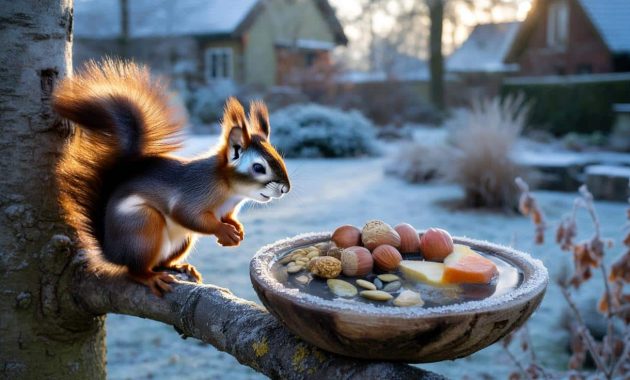
Across central Europe and North America, extended frost turns gardens into survival arenas for squirrels, whose carefully hidden winter stores can suddenly fail them.
Why frost turns from nuisance to danger for squirrels
Most people assume squirrels are perfectly prepared for winter because they bury nuts and seeds in autumn. That picture is only half true. Squirrels are built for agility, not for deep hibernation like hedgehogs or dormice. They stay active all winter, needing regular food to keep warm.
When a dry, relatively mild winter shifts into a period of sharp frost, everything changes. Hard, frozen ground traps buried cache sites. Ice-glazed bark and snow-laden branches become risky climbing routes. Even the most disciplined hoarder may not reach its larder when temperatures plunge.
During long frost periods, squirrels can no longer reach many of their hidden food reserves, even if they stored them perfectly.
In these conditions, squirrels burn calories at a frightening rate. Their small bodies lose heat quickly. To maintain body temperature, they must eat more often, just when access to food becomes hardest.
What an expert sees in an “ice winter”
Wildlife specialists often refer to an “ice winter” when frost, ice and snow persist over many days. One expert from a German wildlife foundation describes this as a critical tipping point for urban and garden-dwelling squirrels.
In parks and gardens, squirrels rely not only on their own buried food, but also on natural leftovers: seeds under leaves, fallen cones, soft bark and buds. A thick, icy crust removes much of that backup buffet.
For young or weaker animals, a single harsh week can mean the difference between survival and death. They have fewer reserves and less experience in navigating frozen terrain or remembering cache locations under a uniform snow cover.
Why hoarded nuts are no guarantee
Squirrels spread hundreds, sometimes thousands, of caches over a wide area in autumn. This strategy protects against theft and local shortages. During normal winters, it works well. Under deep frost, several things go wrong at once:
➡️ The return of the aircraft carrier Truman, a signal badly received by the US Navy facing future wars
➡️ The streak-free window-cleaning method that still works flawlessly even in freezing temperatures
➡️ The Worm Moon 2026: the March full moon and a total eclipse at the start of meteorological spring
➡️ Democrats at Munich security summit to urge Europe to stand up to Trump | Donald Trump
- The soil hardens like concrete, making digging painful and slow.
- Snow hides landmarks, so cached spots are harder to relocate.
- Some nuts freeze or rot in waterlogged ground during thaws.
- Competition from birds and other rodents increases around any remaining accessible food.
Even a squirrel with a “well-stocked pantry” can end up hungry simply because it cannot open the pantry door.
How householders can turn their garden into a frost refuge
The good news: garden owners and balcony dwellers can help quickly and effectively. You do not need a large property or expensive gear. You just need to understand what a squirrel fights against in a frost spell.
A few handfuls of the right food in the right place can bridge the deadly gap between stored reserves and actual access.
What to feed and what to avoid
Wildlife organisations recommend offering a mix that mimics natural food as closely as possible. A small feeding station can include:
| Recommended food | Use with caution | Avoid completely |
|---|---|---|
| Unsalted hazelnuts, walnuts, almonds (in shell) | Sunflower seeds – only small amounts | Salted or spiced nuts |
| Pumpkin and squash seeds | Unsweetened muesli without raisins | Roasted or caramelised nuts |
| Apples, pears, carrots in small pieces | Peanuts in shell – only occasionally and fresh | Chocolate, biscuits, bread |
Fresh water is just as significant as food. In frost, many natural water sources freeze solid. A shallow, heavy bowl with lukewarm water checked several times a day can make a big difference.
Where and how to set up a feeding point
Placement matters. Squirrels are prey animals, constantly scanning for cats, foxes and birds of prey. Try to:
- Position food about 1.5 to 2 metres above ground, for example on a sturdy branch or feeding platform.
- Offer some cover nearby, like dense shrubs or a tree trunk, so animals can flee quickly.
- Keep food away from busy windows where sudden movement can scare them.
- Refill smaller amounts regularly rather than leaving large piles.
Regular, predictable feeding times help squirrels plan their energy use. If you can, set up a routine once in the morning and once in the late afternoon.
Winter housing: why nests fail during extreme cold
Squirrels build leafy nests, known as dreys, usually high in trees. In a standard winter, these bundles of branches and leaves provide decent shelter. Strong frost, icy winds and heavy snow weaken these nests.
Branches can break, nests can get soaked and freeze, and insulation collapses. Young squirrels or injured adults are at special risk when their drey fails during a cold period.
Specialists suggest that garden owners can support by offering nest boxes for squirrels, similar to birdhouses but larger. These boxes provide:
- Dry, wind-protected resting spots.
- Safe space for injured or weakened animals to recover.
- Extra shelter for females in late winter when pregnancy starts.
Simple nest box tips
A squirrel box should be robust, untreated wood, with a sloping roof to shed rain and snow. A round entrance hole of about 7–8 cm lets squirrels in but discourages many predators. Placing two entrances gives them an escape route if threatened.
Install the box at least four metres high, firmly fixed to a healthy tree. Line it lightly with dry hay, straw or wood shavings. Squirrels will usually add leaves and other material themselves.
When helping becomes harmful
Good intentions can backfire if food or structures are placed carelessly. Wildlife experts warn about a few common mistakes.
Support should mimic nature, not replace it. Think of your help as an emergency bridge, not a long-term dependency.
Common problems include:
- Overfeeding with high-fat seeds that attract rats and overweight birds.
- Offering mouldy nuts or bread, which can trigger digestive issues.
- Hand-feeding, which teaches squirrels to approach people and pets too closely.
- Placing feeders right next to busy roads, which raises the risk of collisions.
Short, targeted help during frost spells works best. As temperatures rise and natural food becomes available again, gradually reduce feeding.
Reading the signs: when a squirrel needs urgent help
During severe frost, you might notice squirrels acting differently. Some warning signs of distress include:
- Animals moving slowly, with their body close to the ground and tail drooping.
- Squirrels sitting still on open ground for long periods, even when disturbed.
- Visible ribs or very thin tails.
- Young squirrels on the ground during deep frost, calling repeatedly.
If you see such signs, adding food and water nearby is the first step. In extreme cases, wildlife rescue centres or local animal welfare groups can advise. They often have protocols for hypothermic or undernourished squirrels, including warm boxes and specialised food.
Climate shifts and the new normal for garden wildlife
Climate researchers point to a pattern of milder winters interrupted by sudden, severe cold snaps. For animals that rely on seasonal cues, this is a serious challenge. Squirrels may start breeding earlier in a warm January, only to face lethal frost in February.
This mismatch increases the pressure on already stressed populations living in fragmented urban landscapes. Gardens, balconies and small green spaces can act as mini-reserves, softening the blow of these abrupt weather changes.
Practical winter checklist for squirrel-friendly gardens
For anyone wanting a structured approach, a simple winter checklist helps you prepare before frost arrives:
- Leave some autumn leaves and dead wood under trees as natural foraging areas.
- Install at least one squirrel-friendly nest box in a quiet corner of the garden.
- Store a bag of suitable nuts and seeds indoors, ready for unexpected cold snaps.
- Keep a sturdy, heavy water bowl that cannot easily tip over.
- Note the contact information for local wildlife rescue services.
Each of these steps seems small on its own. Combined, they turn an ordinary garden into a critical safety net during “frost trap” weeks, when squirrels’ survival margins shrink to almost nothing.