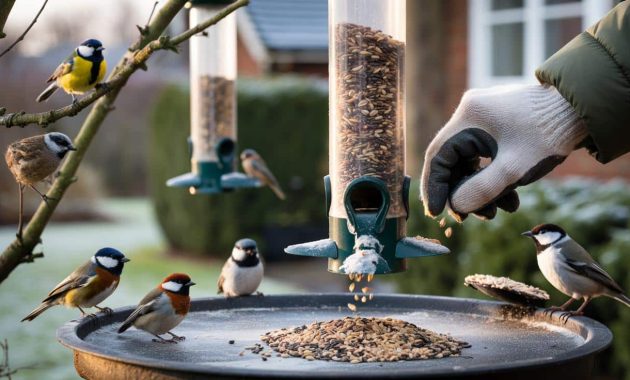
Across Britain and North America, millions of people top up bird feeders in winter, convinced they’re doing a simple, harmless good deed. Few realise that one small oversight – letting seed get damp, mouldy or frozen – can turn that kindness into a serious health risk for the very birds they’re trying to protect.
Good intentions, hidden danger at the feeder
Putting out food when temperatures drop is often the first step into wildlife gardening. Blue tits, chickadees, robins and sparrows quickly learn your routine and return day after day. That trust comes with responsibility.
Rain, sleet, wet snow and heavy fog all do the same thing to bird food: they add moisture. Once seed absorbs water, its texture, smell and nutritional value change fast. The fat-rich kernel that should fuel a freezing night starts to break down instead of nourish.
What looks like a full, generous feeder can in reality be a slow, silent threat if the seed inside has been damp for days.
Mid to late January is often the toughest time. Natural food sources are at their lowest, while storms roll in one after another. Birds push their luck at any available feeder, even if the food quality has started to decline.
How damp seed turns toxic for garden birds
Fresh birdseed is a dry product. Its safety relies on staying that way. When moisture lingers in a feeder tube, seed tray or on the ground beneath, a microscopic drama begins.
Fungal spores and bacteria are everywhere in the environment. On dry seed they cannot thrive. Add water and they wake up.
Damp seed becomes a breeding ground for moulds such as Aspergillus and bacteria including Salmonella, both linked to fatal bird diseases.
Aspergillus can cause a serious respiratory illness known as aspergillosis. It affects the lungs and air sacs of birds, leaving them lethargic, short of breath and unable to maintain body temperature. Many simply disappear from gardens and are written off as “taken by a predator”.
➡️ Experts on alert: Australia’s largest river on the brink of collapse from invasive species
➡️ Better than air freshener: the taxi method to keep the car interior always fresh
➡️ Psychology explains how emotional exhaustion can feel exactly like a lack of motivation, and why the two are often confused
➡️ “I thought small issues didn’t matter”: why they added up
➡️ The amazing eucalyptus tree in Cádiz, 41 meters tall and with an 11-meter circumference that Almost no tourist knows
➡️ People who feel pressure to stay emotionally available often forget to recover
➡️ Armament: Canada puts $6 billion on the table to move away from Washington
➡️ The forgotten kitchen liquid that makes grimy cabinets smooth, clean and shiny with almost no effort
Salmonella, on the other hand, hits the digestive system. Infected birds may fluff up their feathers, sit still for long periods and stop feeding. High densities of birds at a dirty feeder speed up transmission.
Visual warning signs on your bird table
You don’t need a microscope to spot trouble. A quick, honest look at your feeding station can tell you a lot:
- Seed that looks darkened, greyish or oily instead of bright and dry
- Clumps of sticky or slimy seed that no longer flow freely
- A sour or musty smell when you open a feeder
- Furry patches, white or greenish mould, on seed or suet
- Birds ignoring a feeder they usually empty in hours
Any of these signs mean the food should be removed straight away. Leaving it “until they finish it” only compounds the risk.
When the cold bites: frozen seed blocks that drain energy
Moisture doesn’t only cause rot. In a sharp frost after rain, that damp seed can freeze rock solid.
For a small bird in midwinter, every daylight hour is a balancing act between finding food and conserving energy. Chipping at an icy mass of seed costs calories they cannot spare.
A feeder packed with frozen seed is almost as useless as an empty one, and can leave birds weaker than before they arrived.
Imagine a great tit or house sparrow trying to peck a single grain from a solid block in a tube feeder. Each attempt uses energy. Very little reward comes back. As temperatures drop overnight, that deficit can prove fatal.
This problem is especially common with open trays or shallow dishes where water collects easily. Once frozen, these shallow reservoirs turn into bird-sized ice rinks holding trapped seed.
Choosing hardware that keeps food dry
Some feeder designs cope far better with winter weather than others. The right kit cuts the risk of both mould and freezing.
Which feeders work best in bad weather?
| Feeder type | Weather performance | Risk level |
|---|---|---|
| Tube / silo feeder | Seed mostly enclosed, small feeding ports | Low if cleaned and topped up correctly |
| Covered tray | Roof offers some protection, sides often open | Medium, water can still blow in |
| Open table or ground tray | Fully exposed to rain, snow and droppings | High, needs constant monitoring |
Sturdy plastic or metal tube feeders keep most of the seed off the air and out of direct rain. Check that the base has drainage holes and that rain cannot easily seep down the central column.
Placement matters as much as design. A feeder under an overhanging roof, in the lee of a hedge or tucked beside a wall tends to stay drier than one stuck in the middle of an open lawn.
A tiny shift of a few metres – out of the wind, under a simple cover – can dramatically improve the safety of your feeding station.
Daily habits that keep feeders safe
Even the best feeder fails if it is never cleaned or is continually overfilled. A short daily check makes a real difference to bird health.
Simple routine for winter bird feeding
- Feed little and often: Put out roughly what birds will eat in a day, not a week. Adjust quantities based on how quickly feeders empty.
- Rotate food: Avoid topping up on top of old seed. Empty, shake out debris and then refill with fresh.
- Clean weekly: Use hot water and a mild disinfectant or dedicated feeder cleaner. Rinse well and dry before refilling.
- Check after rain or snow: If seed has clearly been soaked, discard it and wash the feeder rather than hoping it dries out.
- Use fattier foods in wet spells: Suet blocks, fat balls without nets and compact seed cakes often cope better with drizzle than loose seed.
Waste always feels uncomfortable, especially when money is tight. Yet throwing away a small amount of spoiled seed costs far less than the loss of a local population of finches to disease.
Best types of food for a cold, damp winter
Not all bird food behaves the same in bad weather. Some options hold up better to moisture and freezing conditions.
- Black sunflower hearts: High in energy, husk-free, less messy, but still vulnerable to mould when damp.
- Peanuts (in mesh feeders): Calorie-dense and fairly robust, though they must be high quality and aflatoxin-free.
- Suet and fat-based products: Excellent in the cold; avoid placing them in full sun or warm spells, when they can smear and grow bacteria.
- Nyjer seed: Popular with goldfinches; tiny size means wet seed spoils quickly, so frequent checks are needed.
Mixing natural food sources with bought food creates a more resilient system. Berry-bearing shrubs, seed heads left on perennials, and fallen apples all provide backup on days when feeders are being cleaned or refilled.
What “biosecurity” means in a back garden
Wildlife organisations often talk about “biosecurity” during bird disease outbreaks, but the term can feel abstract. In a garden, it simply means reducing chances for germs to spread between birds.
Good biosecurity at your feeder means clean surfaces, fresh food, dry conditions and space for birds to feed without crowding.
If you start noticing unusually quiet feeders, several sick-looking birds, or reports of disease in your area, one strong response is to pause feeding for a week or two. This encourages birds to disperse, lowering transmission. During this break, carry out a thorough clean of all feeders, tables and bird baths.
Imagining a safer winter for garden birds
Picture a run of stormy days this January. You check the forecast, see rain moving in and decide to reduce the amount of loose seed you put out. Most goes into a sheltered tube feeder. A small tray of suet pellets sits under a canopy near a hedge. After the rain passes, you empty any damp leftovers, quickly scrub the tray and refill with fresh.
In that simple scenario, the same number of birds visit your garden, but their risk of breathing in fungal spores or picking up harmful bacteria drops sharply. You still enjoy the flicker of wings and flashes of colour, and the birds get the dense energy they need without hidden hazards.
Winter feeding is not just about generosity; it is about management. The seeds you use, the hardware you choose and the way you react to wet weather can tip the balance between help and harm. A few extra minutes each week safeguarding your feeders can genuinely mean the difference between life and death for the small, hungry visitors depending on them this season.