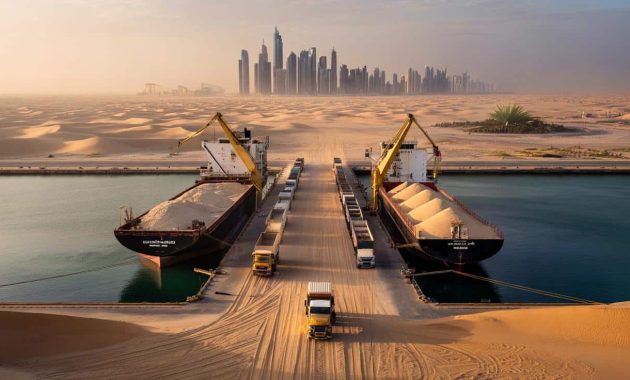
In the heart of the Arabian Desert, where sand dunes stretch as far as the eye can see, an unexpected paradox emerges. The arid nations of Saudi Arabia and the United Arab Emirates, synonymous with vast deserts, find themselves importing millions of tons of sand each year to fuel their relentless construction booms. This seemingly counterintuitive scenario reveals the complex web of global resource demands and the challenges of sustainable urban development in the modern age.
The glittering skylines of Dubai and Riyadh may appear to rise organically from the desert, but the reality is that these cities are built on a foundation of imported sand, a crucial ingredient in the concrete that supports their towering structures. This insatiable appetite for sand has created a global supply chain that spans continents, drawing in resources from as far as Australia and Africa to meet the Gulf region’s voracious construction needs.
The reasons behind this desert sand paradox are multifaceted, rooted in the unique geological and environmental characteristics of the Arabian Peninsula. While the region is blessed with an abundance of desert sand, its composition and texture often fail to meet the stringent quality standards required for construction. The sand grains found in the desert are typically rounded and smooth, lacking the sharp edges and angular shapes that provide the necessary strength and durability for modern buildings and infrastructure.

The Importance of “Good” Sand
In the world of construction, not all sand is created equal. The sand used in concrete and other building materials must possess specific properties to ensure structural integrity and longevity. These include the right size, shape, and mineral composition of the grains, as well as a lack of impurities such as salt or organic matter.
The desert sand of the Arabian Peninsula, while plentiful, often falls short of these requirements. The relentless wind and erosion processes that shape the dunes produce sand grains that are too smooth and rounded, lacking the necessary angular edges to bind effectively with cement. This sand is simply not suitable for the high-rise buildings, expansive road networks, and other large-scale projects that define the region’s urban landscapes.
Consequently, Gulf states have turned to the global sand market, importing vast quantities of the desired material from distant sources to supplement their local supplies. This has created a thriving trade in sand, with countries such as Australia, Canada, and several African nations becoming major exporters to satisfy the insatiable demand from the Middle East.

The Environmental Impact of Sand Mining
The extraction and transport of sand to the Gulf region, however, come with significant environmental costs. Sand mining, both legal and illegal, has led to the depletion of riverbeds, coastal areas, and other natural habitats around the world. This unsustainable practice has disrupted delicate ecosystems, threatened biodiversity, and in some cases, exacerbated the effects of natural disasters such as coastal erosion and flooding.
The carbon footprint of the global sand trade is also a growing concern, as the shipping and transportation of millions of tons of material across vast distances contribute significantly to greenhouse gas emissions. The environmental impact of this sand obsession has led to increased scrutiny and calls for more sustainable practices in the construction industry, both in the Gulf region and globally.
In response, some Gulf states have begun exploring alternative solutions, such as using recycled concrete and developing new technologies to process and utilize local desert sand more effectively. However, the reliance on imported sand remains a persistent challenge, underscoring the complex trade-offs between economic development, resource management, and environmental preservation.

The Societal Implications of the Sand Trade
The sand trade has also given rise to a range of societal challenges, from labor exploitation to organized crime. In some regions, the extraction and transport of sand have been linked to human rights abuses, with migrant workers facing poor working conditions and limited legal protections. Additionally, the lucrative nature of the sand trade has attracted the attention of criminal organizations, leading to the emergence of illegal sand mining operations that further exacerbate environmental damage and undermine local communities.
These societal impacts have fueled growing concerns about the ethical and equitable dimensions of the global sand supply chain. Policymakers and industry leaders are under increasing pressure to address these issues and ensure that the pursuit of economic growth and urban development does not come at the expense of human rights, social justice, and environmental sustainability.
As the Gulf region continues to expand and modernize, the demand for sand will only continue to grow. Addressing this paradox will require a multifaceted approach, one that balances the need for development with the imperative of environmental stewardship and social responsibility. The solutions may lie in a combination of technological innovations, policy reforms, and a shift in global attitudes towards the sustainable use of natural resources.

The Future of Sand in the Gulf Region
Looking ahead, the future of sand in the Gulf region will be shaped by a range of factors, from advancements in construction materials and techniques to evolving environmental regulations and global resource management strategies. As the world grapples with the challenges of urbanization and climate change, the sand paradox in the Arabian Desert serves as a reminder of the intricate connections between economic progress, resource extraction, and environmental preservation.
Ultimately, the ability of Gulf nations to navigate this complex landscape will have far-reaching implications, not just for the region, but for the global community as a whole. The solutions that emerge from this desert sand conundrum may hold the key to unlocking a more sustainable and equitable model of urban development, one that balances the demands of progress with the imperative of environmental stewardship.
Experts Weigh In on the Sand Paradox
“The reliance on imported sand in the Gulf region is a stark example of the disconnect between human development and natural resource constraints. As these countries continue to expand their cities, they must find ways to reduce their dependence on finite resources and adopt more circular, regenerative approaches to construction materials.”
– Dr. Lila Jaber, Sustainability Researcher at the Gulf Research Center

“The global sand trade has created a complex web of environmental, social, and economic issues that require a coordinated, international response. Policymakers, industry leaders, and civil society must work together to develop innovative solutions that prioritize sustainability, fair labor practices, and responsible resource management.”
– Samer Khalil, Regional Director, International Union for Conservation of Nature (IUCN)

“As the demand for sand continues to grow, particularly in rapidly urbanizing regions like the Gulf, we must rethink our approach to construction and development. This means exploring alternative materials, improving recycling and reuse, and designing buildings and infrastructure that are more resource-efficient from the ground up.”
– Eng. Fahad Al-Rasheed, Chief Urban Development Strategist, Saudi Ministry of Municipal and Rural Affairs
The Global Sand Trade: A Paradox with Far-Reaching Implications
The paradox of desert nations importing millions of tons of sand each year to fuel their construction booms is a complex and multifaceted issue with far-reaching implications. From the environmental impact of unsustainable sand mining to the societal challenges arising from the global trade, this phenomenon highlights the urgent need for a holistic, sustainable approach to resource management and urban development.

As the Gulf region continues to evolve and expand, the solutions to the sand paradox will require a concerted effort from policymakers, industry leaders, and the global community. By embracing innovative technologies, fostering a circular economy, and prioritizing environmental and social responsibility, these nations can chart a path towards a more sustainable future, one that balances the demands of progress with the imperative of preserving our shared natural resources.
The desert sand paradox serves as a powerful reminder that the pursuit of economic development and urban growth must be grounded in a deep understanding of the environmental and societal implications of our actions. Only by addressing this complex challenge head-on can we ensure that the cities of the Gulf region, and indeed, the world, truly rise from the desert in a way that is both durable and responsible.
FAQ
Why can’t Gulf countries use their own desert sand for construction?
The desert sand in the Gulf region often lacks the necessary properties, such as angular grains and low impurity levels, to be suitable for construction purposes. The sand is typically too rounded and smooth, failing to meet the quality standards required for concrete and other building materials.

How much sand do Gulf countries import each year?
The exact figures vary, but estimates suggest that Saudi Arabia and the United Arab Emirates import millions of tons of sand annually to support their ongoing construction projects and development initiatives. This reliance on imported sand has created a thriving global trade that stretches across continents.
What are the environmental impacts of the global sand trade?
The extraction and transport of sand to the Gulf region have significant environmental consequences, including the depletion of natural habitats, disruption of ecosystems, and increased greenhouse gas emissions from shipping and transportation. Sand mining has also been linked to coastal erosion and other natural disasters in various parts of the world.
Are there any efforts to address the sand paradox in the Gulf region?
Yes, some Gulf states have begun exploring alternative solutions, such as using recycled concrete and developing new technologies to process and utilize local desert sand more effectively. However, the reliance on imported sand remains a persistent challenge, and more comprehensive, sustainable approaches are needed to address the complex trade-offs involved.
How can the global community address the societal implications of the sand trade?
Addressing the societal challenges associated with the sand trade, such as labor exploitation and organized crime, will require a multifaceted approach. This may involve strengthening labor protections, improving transparency in supply chains, and promoting more equitable and ethical practices in the global sand industry.
What role can technology and innovation play in solving the sand paradox?
Technological advancements, such as the development of alternative construction materials, recycling and reuse processes, and more efficient sand processing techniques, can play a crucial role in reducing the Gulf region’s reliance on imported sand. Embracing these innovations can help create more sustainable, resource-efficient urban development models.
How can policymakers and industry leaders collaborate to address the sand paradox?
Effective solutions to the sand paradox will require close collaboration between policymakers, industry leaders, and other stakeholders. This may involve the development of comprehensive regulatory frameworks, incentives for sustainable practices, and the establishment of global coordination mechanisms to address the environmental and social impacts of the sand trade.
What can individuals do to support more sustainable sand use and urban development?
Individuals can contribute to addressing the sand paradox by supporting sustainable construction practices, advocating for policy changes, and making conscious choices as consumers and citizens. This may include supporting green building initiatives, participating in local urban planning discussions, and raising awareness about the global challenges associated with the sand trade.